University of Maribor, Faculty od Health Sciences, Slovenia
The role of the Faculty of Health Sciences of the University of Maribor in the ZDrauA project
The University of Maribor (UM), through its Faculty of Health Sciences, plays a key role in the ZDrauA project, contributing expertise in the fields of microbiology, bioinformatics, and environmental health. UM leads and actively participates in several activities:
Activity 1.4 - Comprehensive reporting
UM contributes to the preparation of the final project report, which brings together insights from all project activities. This report will provide a comprehensive overview of the health of the river, biodiversity, and pollution, and offer useful recommendations for sustainable river management.
Activity 2.1 - Selection of monitoring locations
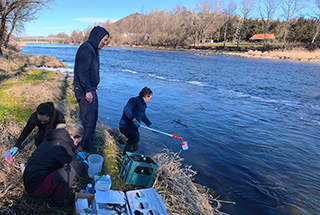
UM is working with partners to select representative monitoring locations along the Drava River. The locations include diverse habitats affected by pollution and untouched ecosystems, ensuring a comprehensive assessment of NGB methods in different ecological conditions.
Activity 2.4 - Monitoring of pathogens and antibiotic resistance
UM supports the monitoring of microbiological parameters at locations upstream and downstream of wastewater treatment plants in Slovenia and Austria. The activity focuses on the detection of markers of faecal contamination, human pathogens (e.g. noroviruses and adenoviruses) and antibiotic resistance genes to assess public health risks and the effectiveness of wastewater treatment plants.
Activity 2.5 - Environmental pollutants and micropollutants
The University of Maribor participates in the assessment of key environmental parameters such as nutrients, organic pollutants, and persistent, bioaccumulative, and toxic (PBT) substances in invasive shellfish. Seasonal sampling at selected locations provides a comprehensive understanding of pollution levels and ecological impacts.
Activity 2.6 - Educational activity
UM organises interactive workshops for university and secondary school students, which include practical training on NGB techniques and promote environmental awareness.
Work package 3: Data integration and information exchange
Activity 3.1 - Cataloguing of data sources: UM leads the review and integration of existing biodiversity and ecological health datasets from national and international sources, ensuring high-quality data for the project.
Activity 3.2 - Analytical pathways for data: UM supports the evaluation and selection of optimal pathways for processing large amounts of NGB data, ensuring that the selected tools are consistent with open source and sustainable practices.
Activity 3.3 - Information exchange platform: UM leads the development of a digital platform for data sharing, analysis, and visualization. This platform enables researchers, policymakers, and stakeholders to make effective use of NGB data.
Activity 3.4 - Development of a dynamic website: UM is creating a multilingual website to engage stakeholders and the public and provide access to project results, data sets, and educational materials in an accessible format.
Project impact
Through its leadership and contributions, the University of Maribor is strengthening the scientific foundations for sustainable environmental practices, promoting cross-border cooperation, and increasing public understanding of biodiversity and water management. The results of the ZDrauA project will shape the future of ecological monitoring and river management in Slovenia, Austria, and beyond.